
Emeka Nnuji from Nigeria
Finding My Own Path From Budapest to Advanced Clinical Practice
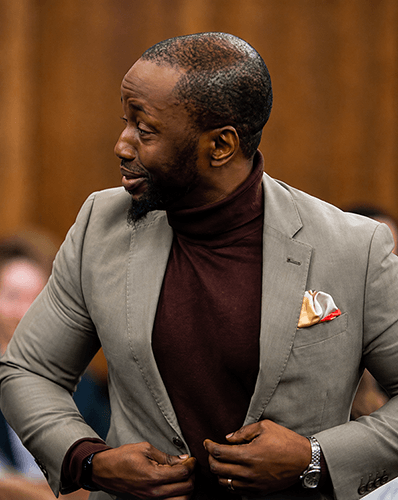
I currently live in Essex in the United Kingdom and work within the NHS as an Advanced Clinical Practitioner, with a physiotherapy background. My area of practice is predominantly proactive frailty care, supporting older people with complex health and care needs to remain as well and independent as possible within their own homes and communities.
The journey that brought me here, however, was certainly not a straight one.
I came to Budapest from Nigeria when I was around 17 years old to join the Pre-Med Programme at McDaniel College Budapest. At that age, I thought I already knew what my future would look like. Coming from a Nigerian family, there was a strong expectation that I would become a doctor, and that was very much the path I had set out to follow.
After completing Pre-Med, I progressed to study General Medicine at Semmelweis University.
Moving to a new country at such a young age was both exciting and challenging. Although my brothers were in Budapest, my parents remained in Nigeria. I was learning to live independently, adapting to a different culture and navigating a very demanding academic environment.
My journey through medicine was not straightforward. There were successes, but also difficult periods and academic setbacks. In hindsight, those experiences forced me to ask myself an important question: was medicine genuinely the career I wanted, or was it the career I felt expected to pursue?
During my studies, I found myself particularly fascinated by anatomy and physiology. I enjoyed understanding how the human body worked and became increasingly interested in movement and function. As I explored physiotherapy further, subjects such as functional analysis deepened that interest.
There was also a very personal influence on my decision.
My mother underwent lumbar spinal surgery in Budapest and was advised to continue with physiotherapy and rehabilitation after returning home to Nigeria. Unfortunately, she did not complete the recommended rehabilitation. When she later returned to Hungary for review, I saw first hand how important that missing part of her recovery had been.
That experience helped me understand something that has stayed with me throughout my career: medical treatment can sometimes be only the beginning of a person's journey. Rehabilitation, function and helping someone return to living their life can be just as important.
I eventually made the difficult decision to leave medicine and pursue physiotherapy.
Convincing my family was another challenge. I particularly remember writing a long email to my father, who was a lawyer back in Nigeria, explaining why I wanted to change direction and reassuring him that this was not a decision I had taken lightly.
In making that decision, I also made something of a pact with myself. If my parents were going to trust me to choose a different path, I wanted to prove that I could succeed in it. I did not simply want to complete my physiotherapy degree. I wanted to work hard, achieve strong results and become one of the best students I could be.
I went on to complete my Bachelor's degree in Physiotherapy at Semmelweis University. Looking back, changing direction was one of the most important decisions I have ever made. What initially felt like stepping away from the path that had been planned for me was actually the point at which I began taking ownership of my own career.
After graduating, I gained some early experience supporting a local Hungarian football team as a physiotherapist before another opportunity took me to Malta. There, I volunteered with Inspire Malta on a government funded hippotherapy project, working alongside physiotherapists, horse instructors and other professionals supporting children with developmental needs, including autism and global developmental difficulties.
I also gained experience within rehabilitation services associated with St James Hospital in Malta. These experiences opened my eyes to the breadth of physiotherapy and the many different ways rehabilitation can help people.
I had always intended to continue my education. I initially explored postgraduate study in Canada, but while considering my options I discovered the Master's programme in Advanced Physiotherapy at the University of Salford in Manchester. I successfully gained a place and received a partial scholarship, which brought me to the United Kingdom.
Since then, I have built my career within the NHS across a range of areas including musculoskeletal physiotherapy, community rehabilitation, falls prevention and respiratory care. I progressed into leadership as Physiotherapy Team Lead within the Havering Falls Service and later became a Clinical Specialist Physiotherapist, leading the Pulmonary Rehabilitation Service in Redbridge.
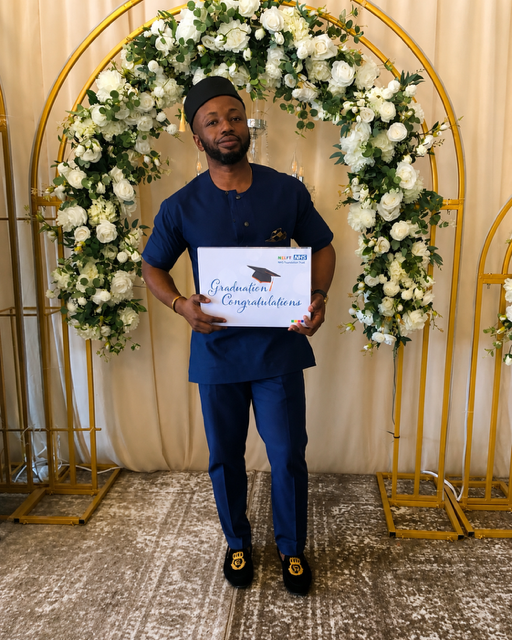
Over time, I became increasingly interested in looking beyond an individual condition and understanding the whole person. I continued to develop clinically, progressing into Advanced Clinical Practice and becoming a Non-Medical Prescriber.
Today, much of my work focuses on proactive care for older people living with frailty. I undertake Comprehensive Geriatric Assessments in people's homes, considering not only their medical conditions but also their medication, mobility, falls risk, cognition, nutrition, social circumstances, future care planning and, importantly, what matters most to them.
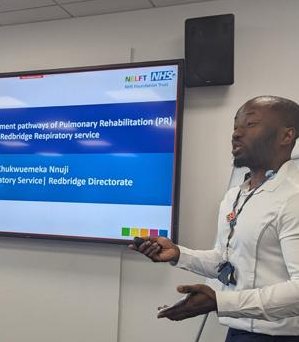
I have been closely involved in developing and delivering a proactive community frailty model that aims to identify people's needs earlier, coordinate care around them and help them remain independent at home wherever possible. I have also had opportunities to share this work with colleagues across the NHS and at wider professional events.
When I look back at the 17 year old who arrived in Budapest convinced that he was going to become a doctor, my career looks very different from the one I imagined then. But I would not change the journey.
My advice to current students would be to remain curious and open to where your experiences might take you. Your career may not follow the route you originally planned, and that does not mean you have failed. Some of the experiences that felt like setbacks to me at the time ultimately redirected me towards opportunities I might never otherwise have discovered.
Have the courage to find your own path, but recognise that choosing it comes with responsibility. Work hard, keep learning and take opportunities that challenge you.
And for those entering healthcare, never lose sight of the person behind the condition you are treating.
Anatomy and physiology first made me curious about how the human body works. Physiotherapy taught me about movement, function and independence. My career since then has taught me that healthcare is ultimately about people, their families, their lives and what matters to them.
That is still what motivates me today.